



Articles
Dutch Oven vs. Bread Machine: Which Baking Method is Better?

08
Nov
Nov
The Ultimate Baking Showdown: Dutch Oven vs. Bread Machine Efficiency
Every dedicated home baker faces a critical decision that dictates not only the texture and flavor of the final loaf but the entire baking journey: manual craft versus streamlined automation. Do you choose the rustic, artisan appeal of the heavy-duty Dutch oven, promising that perfect, crackling crust and airy crumb? Or do you opt for the convenience and hands-off perfection offered by a modern, automated bread machine? This is more than just selecting two pieces of baking equipment; it’s choosing your philosophy in the kitchen.
Here at MBICO, we spend our days designing and optimizing industrial baking lines that produce thousands of flawless loaves every hour. Through this extensive experience, we’ve learned a fundamental truth: the core principles of great bread are universal. The science—the critical physics of heat transfer, the magic of steam management, and the precise science of gluten development—applies equally, whether you are utilizing our multi-deck tunnel ovens or a simple cast-iron pot on your home counter.
We often see bakers, both amateur and professional, struggling with common issues like dense loaves, pale crusts, or inconsistent results. The solution almost always lies in understanding the foundational science behind your chosen method. This head-to-head comparison between the Dutch oven and the bread machine allows us to break down that science, helping you achieve professional-level results at home.
What Determines the Best Choice for Your Kitchen?
In this comprehensive guide, drawing upon decades of industrial expertise, we will analyze the key factors essential for achieving ideal baking results:
- Control vs. Convenience: Evaluating how much influence each method gives you over environmental factors like humidity and temperature.
- Crust and Crumb Development: A deep dive into the science of steam and consistent heat, and how each tool impacts the final texture.
- Cost and Space: A practical comparison of initial investment and kitchen footprint.
- The Final Verdict: Determining which option aligns best with your time commitment, desired loaf quality, and personal baking goals.
By the end of this guide, you will not only understand Dutch Oven vs. Bread Machine: Which Baking Method is Better?, but you will also have a clear framework for choosing the right method for your lifestyle, your goals, and the type of bread you dream of creating.
What is a Dutch Oven and How Does it Bake Bread
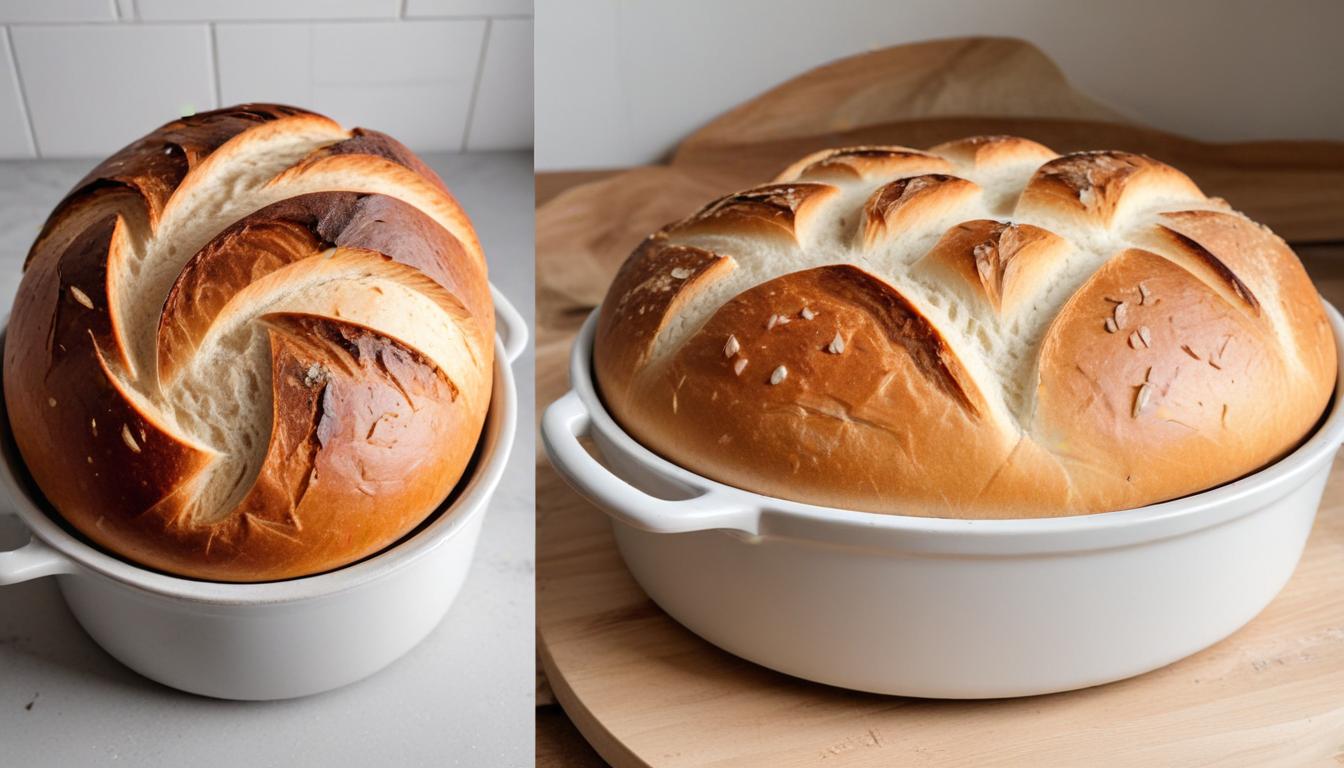
A Dutch oven is, at its heart, a simple yet powerful piece of technology. It’s a heavy, thick-walled cooking pot, typically made of seasoned cast iron, with a tight-fitting lid. Its genius lies not in complexity but in its fundamental mastery of heat and moisture. When you bake bread in a preheated Dutch oven, you are essentially creating a miniature, professional-grade oven inside your conventional home oven. This “oven-within-an-oven” effect is the secret to achieving bakery-quality, artisan bread baking results at home.
The process hinges on two key scientific principles: thermal mass and steam retention.
First, let’s talk about thermal mass. Cast iron is dense and absorbs a massive amount of heat energy. When you preheat your Dutch oven for 45-60 minutes, it becomes a vessel of intense, stored heat. Placing your cool dough inside this scorching environment delivers a powerful thermal shock. This immediate and sustained burst of radiant heat from all directions is what drives a phenomenal oven spring—the rapid expansion of the dough during the initial minutes of baking. It’s the same principle we engineer into the hearths of our MBICO deck ovens, where a solid, hot surface ensures the loaf expands upwards dramatically.
Second, and perhaps more critically, is steam. As the dough heats up, the water within it turns to steam. The Dutch oven’s heavy, tight lid traps this steam, creating a super-humid baking chamber. This is incredibly important for the crust.
In our MBICO test bakery, we’ve demonstrated countless times that a steam-filled environment during the first 15-20 minutes of baking is non-negotiable for a superior crust. The moisture keeps the outer surface of the dough pliable and elastic, allowing the loaf to expand fully without the crust setting prematurely and cracking.
This trapped steam also gelatinizes the starches on the dough’s surface. When you finally remove the lid for the last part of the bake, this gelatinized layer bakes into a stunningly crisp, shiny, and deeply caramelized crust, a result of the Maillard reaction. This is precisely why many no-knead bread Dutch oven recipes produce such professional results with minimal effort; the pot does the work of a professional steam injection system.
A Real-World Example from Our Workshop
I remember a passionate home baker named Sarah who attended one of our workshops. She was frustrated because her free-form loaves baked on a pizza stone were always dense with a dull, thick crust. She had a good recipe and followed the steps for proofing perfectly, but the result was disappointing. We asked her to bring her dough to the next session and simply bake it in one of our preheated Dutch ovens. The difference was night and day. Her loaf exploded with oven spring, the crust was thin and shattered when she cut into it, and the crumb structure was open and light. It wasn’t her recipe or her skill that was lacking; it was her baking environment. The Dutch oven provided the intense, steamy chamber her dough was crying out for.
What is a Bread Machine and How Does it Work
The bread machine, or Automatic Bread Maker, is an entirely different philosophy. It’s an all-in-one appliance designed for maximum convenience. It combines a small, non-stick baking pan with a built-in mixing paddle, a heating element, and a microprocessor. The user simply adds the ingredients in the specified order, selects a program, and presses “start.” The machine then automates the entire process: mixing, kneading, proofing, and baking, all within its self-contained unit.
The science behind a bread machine is one of controlled, sequential automation. The process typically unfolds like this:
- Mixing and Kneading: A small paddle at the bottom of the pan rotates to combine the ingredients and develop the gluten network. The machine often includes rest periods to allow the flour to fully absorb the water, which is crucial for proper dough hydration. The kneading, however, is less vigorous and comprehensive than manual kneading or a stand mixer.
- Rising (Proofing): The internal heating element gently warms the baking chamber to an optimal temperature for yeast activity, ensuring a consistent first and sometimes second rise. This removes the environmental variables that can challenge beginners, like a cold kitchen.
- Baking: The heating element then ramps up to baking temperature. The heat is primarily convective and conductive, radiating from the sides and bottom of the pan. This direct contact is why bread machine loaves often have a very dark, thick bottom and side crust, with a paler, softer top crust.
The primary appeal of this method is its reliability and ease of use, making it a fantastic entry point for bread making for beginners. You can have fresh bread with less than ten minutes of active work. Many machines also come with advanced features like delayed start timers, so you can wake up to the smell of freshly baked bread. Popular bread machine recipes often include whole wheat, gluten-free, and even quick breads or jams.
The Trade-Off for Convenience
One of the most common challenges our customers transitioning from bread machines to more traditional methods face is a desire for a better crust and a more irregular, open crumb. A client, a busy father of three named Ali, loved the convenience of his bread machine for daily sandwich bread. But for weekend dinners, he wanted something more special. He told us, “The machine gives me bread, but the Dutch oven gives me an experience and a result that feels like an achievement.”
His experience highlights the inherent limitations of the bread machine’s design. The vertical, deep pan restricts the loaf’s shape and oven spring. The lack of a humid baking environment means the crust sets faster and never achieves that thin, crackly quality. The single-paddle kneading is efficient but often results in a tighter, more uniform crumb structure compared to the irregular, airy crumb of an artisan loaf.
The Head-to-Head Comparison: Dutch Oven vs. Bread Machine
Choosing between these two methods depends entirely on your priorities. Are you optimizing for quality and craft, or for convenience and consistency? Let’s break down the key differences in a detailed comparison.
| Feature | Dutch Oven Method | Bread Machine Method |
|---|---|---|
| Crust Quality | Superior. Thin, crispy, crackly, and deeply caramelized due to trapped steam and high thermal mass. Professional-level results are achievable. | Variable. Typically softer, paler on top, with thicker, darker sides and bottom. Lacks the signature “crackle” of an artisan loaf. |
| Crumb Structure | Potentially more open, airy, and irregular (artisan-style), especially with higher hydration doughs. Allows for greater control over fermentation. | Typically more uniform, tighter, and denser. Excellent for sandwich bread but less “artisanal.” The paddle can leave an indentation at the bottom. |
| Convenience & Effort | Low. Requires manual mixing, kneading (unless no-knead), shaping, and monitoring. Multiple steps and significant hands-on time. | High. “Set-it-and-forget-it” process. Add ingredients, press a button. Minimal active time and cleanup. |
| Versatility | High. The pot itself can be used for soups, stews, and roasts. For bread, it allows for various shapes (boule, batard if using an oval baker) and recipes. | Moderate. Limited to the shape of its pan. However, many models have settings for different types of bread, cakes, jams, and dough-only cycles. |
| Skill Level Required | Beginner to Advanced. While a no-knead recipe is simple, mastering shaping, scoring, and proofing takes practice and understanding. | Beginner. Designed to be foolproof. The machine controls all critical variables, making it ideal for those new to baking. |
| Cost | Moderate. A quality enameled cast iron Dutch oven can be a significant investment ($50 – $400), but it lasts a lifetime. | Moderate. A good bread machine typically costs between $70 and $300. Electronics can fail over time. |
| Consistency & Reliability | Dependent on user skill. Variables like room temperature, proofing time, and shaping technique can lead to inconsistent results initially. | Extremely high. The controlled environment produces a very consistent loaf every single time, provided the recipe is followed precisely. |
| Cleaning & Maintenance | Relatively easy. Can be hand-washed. Enameled versions are simpler to clean than raw cast iron, which requires seasoning. | Very easy. The non-stick pan and paddle are usually easy to clean. Some are dishwasher-safe. |
The Science Behind the Perfect Crust and Crumb
To truly understand why these two methods produce such different results, we need to look at the underlying food science. At MBICO, we obsess over these details because they are the difference between a good product and a great one.
Why Steam is Crucial for an Artisanal Crust
As mentioned, steam is the Dutch oven’s superpower. When hot, humid air surrounds the dough, it accomplishes two things. First, it delays crust formation. This allows the yeast to work for longer in the hot oven, creating that last burst of leavening known as oven spring, leading to a lighter, more voluminous loaf. Second, the moisture on the surface interacts with the flour’s starches.
Think of it like cooking rice. The steam gelatinizes the starches, creating a thin, flexible, and slightly glossy layer. When the steam is removed (by taking off the lid), this layer is exposed to dry, high heat, which then crisps and browns it beautifully through the Maillard reaction. A bread machine, lacking this initial steam bath, moves directly to the dry-baking phase, setting the crust early and preventing this magical transformation.
How Kneading Affects Gluten Development and Crumb
Gluten development is the process of hydrating and agitating flour proteins (glutenin and gliadin) to form a strong, elastic network. This network traps the CO2 produced by the yeast, creating the pockets that form the bread’s crumb. A Dutch oven loaf is typically made with dough that is kneaded by hand, in a stand mixer, or through a long, slow fermentation (like a no-knead recipe). These methods allow for superior gluten development, creating a web that can stretch thin to support large, irregular air pockets—the hallmark of an open crumb structure.
A bread machine’s single paddle is effective, but it works the dough in a more uniform, less comprehensive way. This tends to create a more homogenous gluten network with smaller, tighter, and more regular air pockets. This is perfect for a sturdy sandwich slice that holds fillings well, but less desirable for a rustic loaf you want to tear apart and dip in olive oil.
The Impact of Heat Distribution on Oven Spring
Heat transfer is the final piece of the puzzle. A Dutch oven, preheated to a high temperature, bombards the dough with intense, even, radiant heat from its thick walls. This immediate energy transfer supercharges the yeast’s activity and rapidly turns water in the dough into expanding gas, resulting in a powerful and vertical oven spring.
A bread machine uses a combination of conduction (from the pan) and convection (from the circulating air). The heat source is at the bottom, so the baking is less even. The top of the loaf is farthest from the primary heat source and receives less direct energy, which is why it’s often paler and softer. The overall temperature is also generally lower and more controlled than what you can achieve in a home oven with a preheated Dutch oven, limiting the potential for a dramatic oven spring.
Who Should Choose a Dutch Oven
The Dutch oven is for the baker who sees bread making as a craft and a sensory experience. If you love the feeling of dough in your hands, the satisfaction of perfectly shaping a loaf, and the thrill of seeing your creation rise in the oven, this is the tool for you.
You should choose a Dutch oven if:
- Quality is your top priority. You are chasing the perfect crust, a beautiful open crumb, and the deep flavor that comes from controlled fermentation.
- You enjoy the process. For you, the journey of baking—the mixing, kneading, and shaping—is as rewarding as the final product.
- You want versatility. You want to bake round boules, oval batards, and use your pot for a wide range of other cooking applications.
- You want to control every variable. You want to experiment with dough hydration levels, proofing times, and scoring patterns to create your signature loaf.
Who Should Choose a Bread Machine
The bread machine is for the pragmatist, the time-crunched parent, the novice baker, or anyone who wants the reward of fresh, homemade bread without the time commitment and learning curve of traditional methods.
You should choose a bread machine if:
- Convenience is your top priority. You have a busy lifestyle and need a “set-it-and-forget-it” solution for fresh bread.
- You value consistency. You want a reliable, predictable loaf every single time without worrying about external factors like kitchen temperature.
- You are a beginner. You want a gentle introduction to bread making for beginners, building confidence before tackling more complex techniques.
- You primarily want sandwich bread. The uniform shape and tighter crumb of a bread machine loaf are perfectly suited for slicing and sandwiches.
Can You Use Both Methods Together
Absolutely. This “hybrid” approach offers the best of both worlds and is a fantastic way to upgrade your bread quality without a huge time investment. You can use the bread machine’s “Dough” cycle to handle the laborious mixing and kneading, as well as the first rise in a perfectly controlled environment.
Once the cycle is complete, you simply remove the perfectly developed dough, gently shape it by hand, let it go through a final proof, and then bake it in a preheated Dutch oven. This method leverages the machine’s convenience for the heavy lifting while harnessing the Dutch oven’s superior baking environment to achieve an incredible crust and oven spring. For many bakers, this is the ultimate compromise, delivering artisan-quality results with machine-level ease.
In conclusion, the question is not which method is inherently “better,” but which is better *for you*. The Dutch oven is an instrument of craft, offering unparalleled quality at the cost of time and effort. The bread machine is a tool of convenience, delivering consistent, good-quality bread with almost no hands-on work. By understanding the science behind how each method works, you can make an informed choice that aligns with your baking aspirations and lifestyle. Whether you choose the path of the artisan or the path of the automaton, the ultimate reward is the same: the simple, profound joy of a warm, fresh loaf of bread made in your own home.
Our advice at MBICO is always to start with your goal. If your goal is to replicate the bread from your favorite artisan bakery, the Dutch oven is your clear choice. If your goal is to replace store-bought sandwich bread with a healthier, homemade alternative without adding stress to your week, the bread machine will be your most trusted kitchen ally.
Ready to take your understanding of baking science to the next level? Explore MBICO’s definitive guide on Industrial Deck Ovens to see how the principles of thermal mass and steam injection are applied on a massive scale to produce the world’s finest baked goods.
Frequently Asked Questions about Dutch Oven vs. Bread Machine: Which Baking Method is Better?
Can I get a crispy crust from a bread machine?
It is difficult to achieve a truly crispy, artisan-style crust in a bread machine due to the lack of a steamy environment and intense radiant heat. However, you can improve it slightly. Some tips include removing the loaf from the machine as soon as it’s done to prevent it from steaming in the pan and becoming soft, or even placing the finished loaf in a conventional oven at 200°C (400°F) for 5-10 minutes to help crisp up the exterior.
What size Dutch oven is best for bread?
For most home bakers, a 5 to 7-quart (approximately 4.7 to 6.6 liters) round Dutch oven is ideal. This size is large enough to allow for good oven spring for a standard-sized loaf (made with about 3-4 cups of flour) without being so large that the steam dissipates too quickly. A round shape helps the dough hold its structure as it bakes upwards.
Do I need to preheat my Dutch oven?
Yes, preheating is absolutely critical. Placing cold dough into a fully preheated Dutch oven (usually for at least 45 minutes at a high temperature) creates the thermal shock necessary for maximum oven spring. Baking in a cold or partially heated Dutch oven will result in a denser, less impressive loaf. Always handle the hot Dutch oven with extreme care.
Is a bread machine more energy-efficient?
Generally, yes. A bread machine is a small, insulated appliance that uses significantly less energy than heating a full-sized conventional oven for over an hour (including preheating time). If you bake bread frequently, using a bread machine can lead to noticeable energy savings over time.
Explore MBICO's categories
Bakery equipment
13 Products
bulk and semi-bulk bread baking ovens
3 Products
Bulk Breads Baking equipment
14 Products
Confectionery equipment
7 Products
Mini ovens
3 Products
Pizza and food ovens
4 Products
Baking equipment
25 Products
Bakery oven
5 Products
Tafton baking ovens
3 Products
Barbari baking ovens
4 Products
Sangak bakery ovens
3 Products
Lavash baking ovens
3 Products
Pastry and confectionery ovens
3 Products
Baking ovens
10 Products
Mobile baking machines
4 Products
Explore MBICO's products
Pastry Dough Sheeter
Fixed Rotary Semi-Automatic Oven for Baking Traditional Breads
Portable Rotary Semi-Automatic Oven for Baking Sangak Bread
4-Roll Dough Sheeter
2-Roll Dough Sheeter (2-Roll Tabletop Dough Sheeter)
Kitchen trailer
Bread Slicing Machine
Spiral Mixer