



Articles
The Ultimate Guide to Commercial Oven Temperature & Humidity

04
Jul
Jul
Mastering the delicate balance of thermal energy and moisture is the ultimate secret to bakery success
Imagine walking into a bustling commercial bakery at four in the morning. The air is filled with the rich, earthy aroma of fermenting yeast, and the steady hum of mixing machinery promises a productive day ahead. Yet, as the first batch of baguettes emerges from the massive commercial oven, the head baker’s heart sinks. Instead of the expected glossy, blistered golden-brown crust and wide, airy crumb, the loaves look dull, pale, and disappointingly flat. The crust is thick and leathery, and the cuts made on the dough’s surface have barely opened. This all-too-common scenario has very little to do with the quality of the flour or the fermentation time. Instead, it is a direct consequence of an unbalanced thermal microclimate inside the baking chamber. In the high-stakes world of industrial baking, temperature and humidity are not merely settings on a control panel; they are the fundamental thermodynamic forces that dictate the texture, volume, color, and shelf life of every single baked good.
For decades, professional bakers and food process engineers have recognized that baking is a highly dynamic thermodynamic event. When dough enters a commercial oven, it transitions from a cold, wet, elastic biological structure into a hot, aerated, fixed physical structure. The success of this transformation depends entirely on how quickly heat penetrates the core of the dough and how effectively moisture is managed on its surface. In our years of experience setting up industrial baking lines across the globe, we have observed that even a minor deviation of five degrees Celsius or a ten percent drop in relative humidity can ruin thousands of loaves, leading to massive financial losses and wasted energy. Managing these variables requires a deep, scientific understanding of heat transfer mechanisms and the physical chemistry of water vapor.
By the end of this guide, you will not only understand the scientific principles of optimizing temperature and humidity in commercial ovens for maximum efficiency, but also learn how to apply these concepts practically to improve product quality, reduce energy consumption, and boost your bakery’s bottom line.
“Baking is where physics meets chemistry under the influence of extreme heat. If you control the climate inside your oven, you control the destiny of your bread.”
Understanding the fundamental physics of heat transfer inside commercial baking chambers
To optimize a commercial baking oven, one must first master the physics of how heat moves from the oven’s heating elements or burners into the dough. Inside a commercial baking chamber, heat transfer occurs through three primary mechanisms: conduction, radiation, and convection. Conduction is the direct transfer of heat through physical contact, such as when the bottom of a loaf of bread rests on a hot ceramic stone or metal baking plate. Radiation is the transfer of electromagnetic energy directly from the hot walls, ceiling, and tubes of the oven to the dough’s surface without requiring a medium. Convection is the transfer of heat through a moving fluid, which in this case is the hot air and water vapor circulating around the baking chamber.
Each of these heat transfer mechanisms plays a distinct role at different stages of the baking process. During the initial minutes, radiation and conduction are critical. They rapidly heat the outer layers of the dough, initiating a phase of rapid gas expansion known as the oven spring. However, as the baking cycle progresses, convective heat transfer becomes dominant, especially in modern rotary rack ovens and tunnel ovens. The velocity of the air, the density of the water vapor, and the overall temperature of the baking chamber determine the heat transfer coefficient. If the air velocity is too high, it dries the surface of the dough prematurely, locking the loaf in a rigid shell before it has had a chance to expand fully. Conversely, if the air velocity is too low, heat transfer is sluggish, resulting in an extended baking time, dry crumb, and increased energy consumption.
Convective heat transfer accelerates surface drying while radiation penetrates the core
Convective heat transfer is highly efficient but must be carefully managed. When hot dry air sweeps across the wet surface of a raw loaf, it rapidly evaporates the surface moisture. This evaporation acts as a cooling mechanism, keeping the surface of the dough at or near the wet-bulb temperature of the air, which is significantly lower than the oven’s set point temperature. While this evaporation is necessary to eventually form a dry, crispy crust, doing it too early is catastrophic. If the convective air dries out the dough surface before the yeast has completed its final thermal burst and before the carbon dioxide gas has fully expanded, the crust will crack awkwardly, and the bread will remain dense and heavy.
Radiant heat, on the other hand, penetrates deeper into the dough structure without aggressively stripping moisture from the surface. In our manufacturing facility, we design our baking chambers with high-emissivity materials that maximize radiant heat transfer. According to MBICO’s internal baking chamber trials, balancing radiant energy with gentle, controlled convection allows for a more uniform heat distribution. This thermal harmony ensures that the core of the dough reaches the critical temperature required for starch gelatinization and protein coagulation at the exact same moment that the crust achieves its perfect golden hue, resulting in optimal crumb elasticity and a beautifully developed crust.
The chemical magic of starch gelatinization relies heavily on precise thermal control
As heat penetrates the dough, it triggers a sequence of highly sensitive chemical reactions. Between 55°C and 65°C, the starch granules embedded in the flour matrix begin to absorb water rapidly, swelling and gelatinizing. This process is crucial because it transforms the fluid dough into a semi-solid, crumb-like structure. If the oven temperature rises too quickly, the outer starch layers gelatinize and set prematurely, creating an insulating barrier that prevents heat from reaching the center of the loaf. This leads to a common baking defect: a bread that is burnt on the outside but doughy and underbaked in the middle.
At the same time, the gluten proteins—gliadin and glutenin—begin to denature and coagulate at around 70°C to 80°C. This protein coagulation forms the structural framework of the bread, trapping the expanded gas bubbles. If the humidity inside the oven is too low, the lack of moisture accelerates the setting of this protein matrix, restricting the expansion of the loaf. By maintaining precise temperature zones and managing the humidity levels within the baking chamber, bakers can synchronize starch gelatinization and protein denaturation, ensuring that the loaf reaches its maximum volume and structural integrity before the structure is permanently locked.
The critical role of humidity and steam injection during the initial stages of baking
To the untrained eye, injecting water vapor or steam into a hot oven seems counterintuitive. Why would you introduce moisture to a machine designed to dry and bake food? The answer lies in the unique thermodynamic properties of water vapor. Steam has a high latent heat of vaporization. When high-temperature steam is injected into a commercial oven containing relatively cool dough (which is typically around 25°C to 30°C after proofing), the water vapor immediately condenses onto the cold surface of the dough. As it condenses, the steam releases an enormous amount of latent heat directly onto the dough’s skin, raising its temperature much faster than dry air ever could.
This condensation process is absolutely essential for several physical and chemical reasons. First, the layer of water condensation keeps the outer skin of the dough highly elastic. As the carbon dioxide gas inside the dough expands due to the rising temperature (a phenomenon governed by Charles’s Law, where gas volume is directly proportional to temperature), the elastic skin stretches effortlessly. This allows the cuts or scores made by the baker to open cleanly, creating beautiful, distinct patterns and maximizing the total volume of the loaf. Without steam, the skin would dry instantly, forming a rigid shell that ruptures randomly under the pressure of the expanding gas.
Steam prevents premature crust formation and allows the dough to achieve maximum oven spring
One of the most common challenges our customers face is achieving a uniform, high-volume oven spring. Without adequate steam injection during the first two to three minutes of the baking cycle, the surface of the dough quickly dries and forms a premature crust. This crust acts as a physical straitjacket, confining the expanding gases and resulting in a dense, compact crumb structure. Furthermore, the pressure buildup inside a prematurely crusted loaf often forces its way out through the weakest point, usually near the bottom of the loaf, causing unsightly blowouts and irregular shapes.
By injecting a controlled volume of wet steam at the start of the baking cycle, we create a temporary high-humidity environment where the relative humidity approaches one hundred percent. This wet climate ensures that the dough surface remains moist and flexible. The water condensation also dissolves the soluble sugars present on the surface of the dough, creating a thin, liquid syrup layer. This syrup layer is the raw material required for the next critical chemical phase: dextrinization and the Maillard reaction.
Starch dextrinization creates that highly coveted golden gloss on the crust
As the baking cycle progresses and the steam injection phase ends, the oven’s exhaust dampers are opened to evacuate the moisture, allowing the surface temperature of the loaf to rise rapidly above 100°C. Once the surface water has evaporated, the temperature of the crust quickly climbs toward 150°C to 200°C. In this temperature range, two major chemical processes occur: starch dextrinization and the Maillard reaction. Dextrinization is the thermal breakdown of starch molecules into smaller, sweeter carbohydrates called dextrins. When these dextrins dry out, they form a glassy, glossy glaze on the surface of the bread, giving it its classic, appetizing shine.
Simultaneously, the Maillard reaction takes place between the reducing sugars and the amino acids on the dough’s surface. This complex chemical reaction produces hundreds of different flavor compounds and brown pigments called melanoidins. If the dough surface was not kept wet during the initial stages of baking, the starch would not have gelatinized on the very exterior of the loaf, and the sugars would not have dissolved. The resulting crust would be dull, gray, and dusty, lacking both the beautiful golden-brown color and the rich, roasted aroma that define high-quality baked goods. Thus, the moisture introduced by steam at the beginning of the bake is directly responsible for the crispness and coloration achieved at the end of the bake.
A practical troubleshooting guide for temperature and humidity imbalances
In a commercial bakery, diagnosing baking defects quickly is essential to maintaining profitability. When temperature and humidity levels inside the oven are out of balance, the dough will exhibit clear, predictable symptoms. The table and detailed guide below outline how to identify these issues, trace them to their root causes, and implement precise thermodynamic solutions.
| Symptom | Root Cause (Thermal/Moisture Imbalance) | Immediate Corrective Action | Long-Term Optimization Solution |
|---|---|---|---|
| Thick, leathery crust with dull, pale coloration | Insufficient initial steam injection and low relative humidity during the first phase of baking. | Increase steam injection duration by 3 to 5 seconds; check steam pressure. | Calibrate steam nozzles and inspect the water softening system to prevent mineral clogging. |
| Crust split at the bottom (blowouts) and poor oven spring | Premature crust formation due to dry oven air or excessive top heat. | Reduce top heat temperature slightly; ensure steam is injected immediately after loading. | Install automated steam dampers to seal the chamber during the initial baking phase. |
| Soft, soggy crust that loses crispness rapidly after cooling | Inadequate moisture evacuation during the final stage of baking. | Open the oven exhaust dampers earlier or increase damper ventilation rate. | Program a multi-stage baking profile that actively vents moisture during the last 20% of the cycle. |
| Uneven coloration across different shelves or areas of the oven | Poor air circulation, uneven heat distribution, or failing heating elements. | Rotate racks mid-bake (if manual); check for blocked air distribution ducts. | Upgrade to an MBICO oven featuring advanced airflow adjustment baffles and high-thermal-mass soles. |
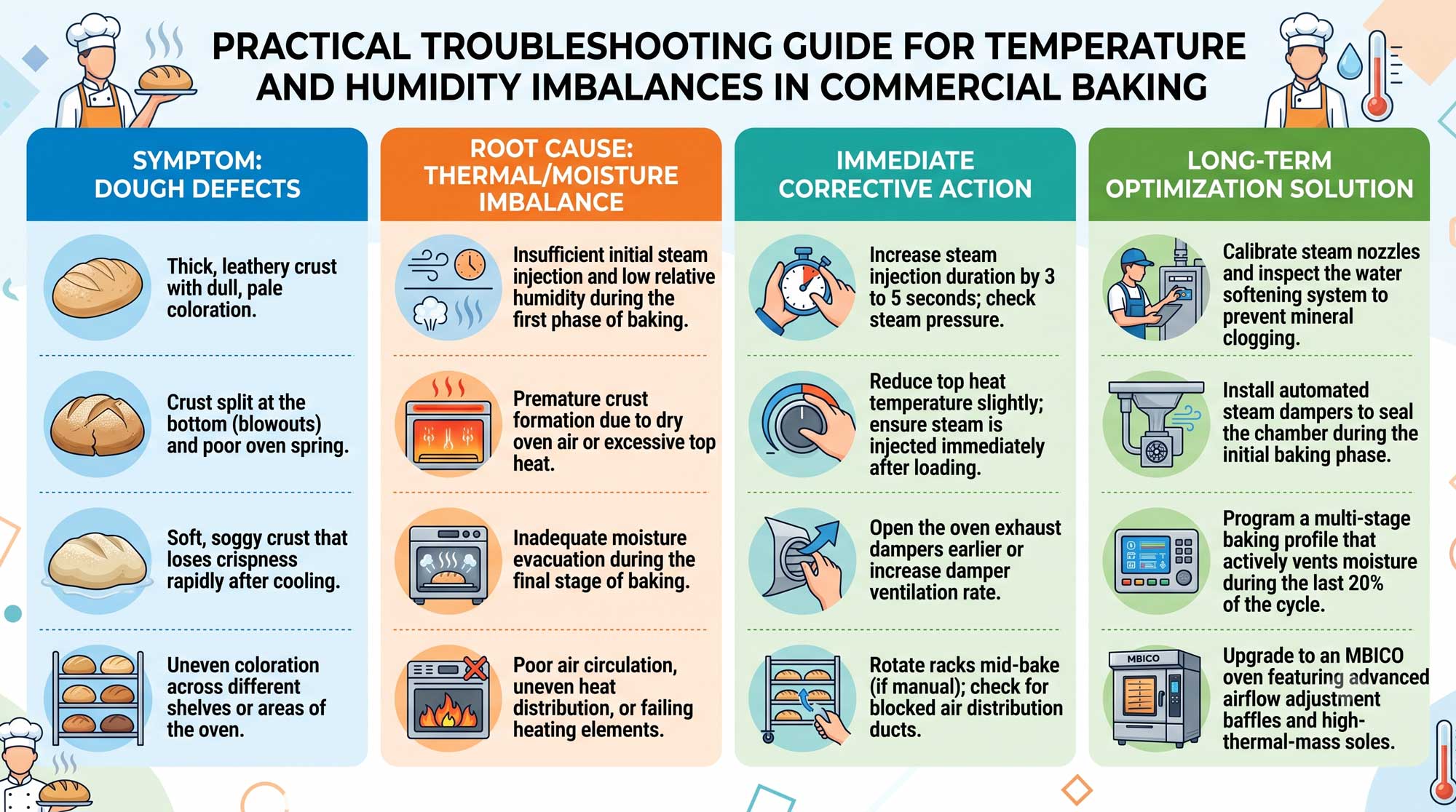
Addressing the mystery of the pale flat crust and dense crumb structure
When a bakery experiences a sudden drop in product quality characterized by pale, flat loaves, the instinct is often to adjust the yeast levels or proofing times. However, our engineering team frequently discovers that the culprit is a hidden malfunction in the steam generation or delivery system. Over time, hard water minerals precipitate inside the steam generator, coating the heating elements and nozzles with a thick layer of scale. This scale acts as an thermal insulator, drastically reducing the volume and pressure of the steam delivered to the baking chamber. When the steam pressure drops, the water vapor fails to distribute evenly, leaving some areas of the oven bone-dry.
To solve this, bakers must establish a strict maintenance routine for their steam systems. We recommend checking the steam output weekly and ensuring that a high-quality water filtration and softening system is installed upstream of the oven. Additionally, verifying that the exhaust dampers are sealing tightly during the steam phase is critical. If the damper seals are worn, the injected steam will escape immediately into the bakery’s exhaust hood, rendering the steam cycle useless and wasting significant amounts of thermal energy.
Solving the challenge of uneven coloration and excessive energy consumption
Uneven coloration is a major challenge, particularly in large rotary rack ovens and long tunnel ovens. This issue is typically caused by uneven convective airflow or localized cold spots within the baking chamber. When hot air is not distributed uniformly, some zones of the oven transfer heat much faster than others. This leads to a situation where some loaves are overbaked and dry, while others on the same rack remain pale and underdone. Not only does this ruin product consistency, but it also forces the baker to extend the baking time, which increases energy consumption and dries out the entire batch.
To eliminate these thermal discrepancies, modern commercial ovens utilize adjustable airflow baffles along the walls of the baking chamber. By carefully adjusting these baffles, a technician can fine-tune the velocity of the hot air at different heights, ensuring that the top, middle, and bottom of the baking rack receive the exact same amount of thermal energy. Furthermore, upgrading to high-density, double-layered insulation around the baking chamber prevents heat from escaping into the surrounding bakery space. This reduces the load on the burners, stabilizes the internal thermal profile, and lowers fuel consumption by up to twenty-five percent.
How different commercial oven designs manage thermal profiles and moisture levels
Different baked goods require entirely different thermal and moisture environments to achieve their characteristic qualities. Consequently, the commercial bakery equipment market offers several distinct oven designs, each engineered to manage heat and humidity in a unique way. Choosing the right oven for your product line and understanding how it handles thermodynamics is key to maximizing operational efficiency.
Deck ovens offer unmatched control over bottom heat for artisanal breads
Deck ovens are the gold standard for artisanal bread baking, rustic sourdoughs, and high-quality pizzas. A deck oven consists of multiple stacked baking chambers, each lined with heavy ceramic or stone soles. The primary heat transfer mechanism in a deck oven is conduction from the hot stone sole directly into the bottom of the dough, combined with intense radiant heat emitting from the chamber ceiling. This direct conductive heat is what creates the bold, dark bottom crust and incredible oven spring characteristic of traditional European breads.
Furthermore, deck ovens are designed with individual steam generators for each deck. This allows the baker to apply heavy, wet steam to one compartment while baking dry pastry products in the compartment directly above it. Because there is no active air circulation (forced convection) inside a deck oven, the steam remains undisturbed, settling as a thick, uniform blanket over the dough. This static, humid environment is perfect for delicate, high-hydration doughs that require a long, gentle bake to develop deep flavor profiles and a blistered, shiny crust.
rack ovens maximize throughput via rapid convective airflow
For high-volume production of sweet breads, buns, rolls, cookies, and pastries, rack ovens are incredibly efficient. In a rack oven, an entire rack laden with hundreds of products is rolled into the baking chamber, lifted, and rotated continuously. The primary heat transfer mechanism is forced convection. A powerful fan draws air past a heat exchanger or gas burner, blowing it through vertical slots in the baking chamber wall, across the rotating trays, and back into the heating system.
This rapid movement of hot air ensures exceptionally uniform heat transfer to every single item on the rack. However, because convection accelerates evaporation, managing humidity in a rack oven is highly challenging. To prevent the pastries from drying out, rack ovens are equipped with high-capacity cascade steam systems. These systems cascade water over a massive thermal mass of iron bars or spheres located directly in the path of the circulating air, instantly generating a large volume of wet steam. The key to efficiency in these ovens is timing: the rotation must be synchronized, the steam must be injected quickly, and the exhaust fan must be carefully controlled to evacuate the moisture at the precise moment the product structure sets.
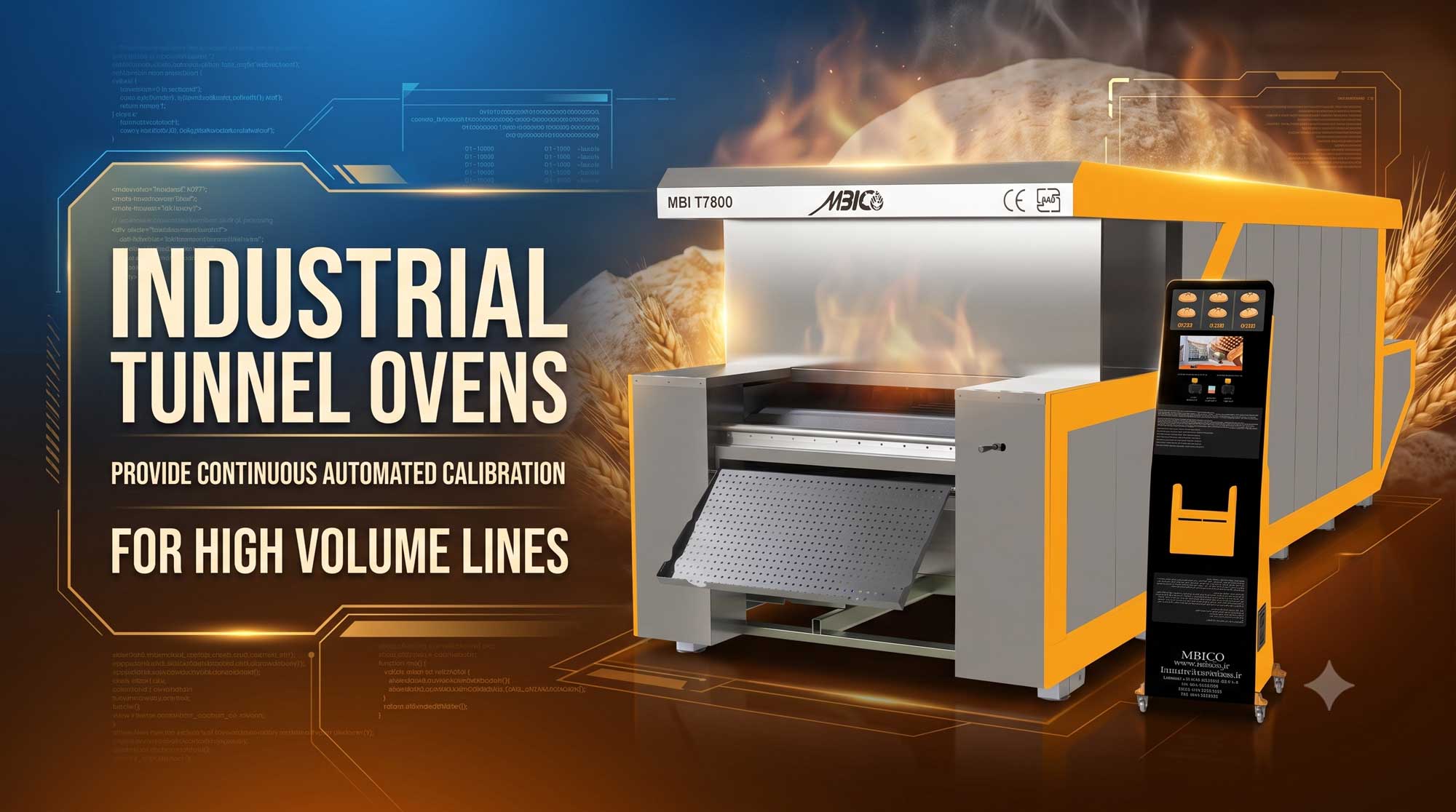
Industrial tunnel ovens provide continuous automated calibration for high volume lines
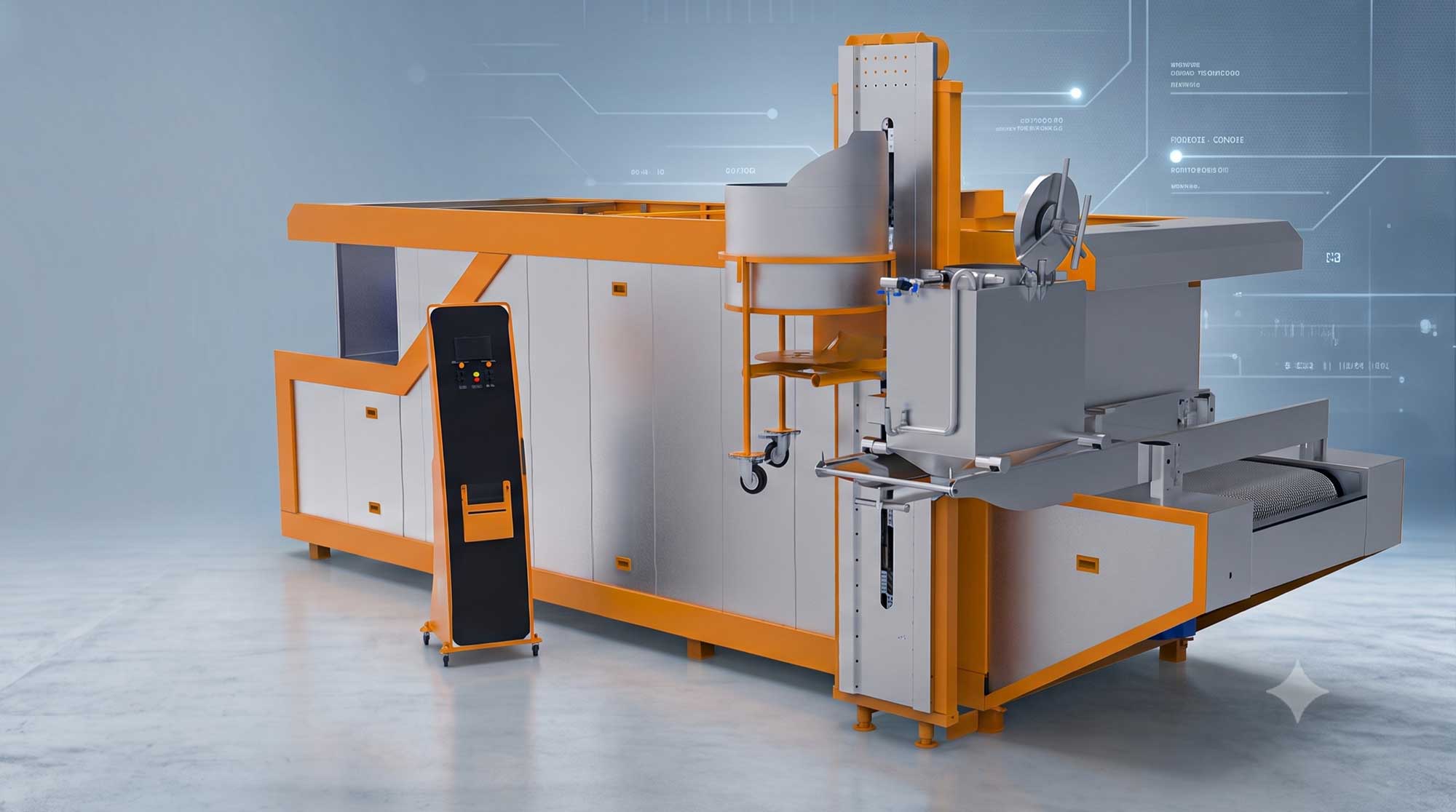
In large-scale industrial bakeries producing thousands of loaves of sandwich bread or hamburger buns per hour, tunnel ovens are the preferred solution. A tunnel oven is a massive, continuous baking system where a metal mesh or solid steel conveyor belt transports the product through a long heating tunnel. The tunnel is divided into multiple independent heating zones, each with its own temperature and humidity controls. This allows engineers to create a highly customized, dynamic thermal profile along the length of the oven.
As the dough enters the first zone of the tunnel oven, it is subjected to high humidity and moderate temperatures to encourage maximum oven spring without crusting. As the conveyor moves the product into the middle zones, the temperature is increased, and the humidity is reduced to facilitate starch gelatinization and core baking. In the final zones, the dampers are fully opened to vent all moisture, and radiant burners are activated to caramelize the sugars and brown the crust. Optimizing a tunnel oven requires continuous calibration of belt speed, zone temperatures, and exhaust damper positions, but it offers the highest level of energy efficiency and product consistency possible in modern food manufacturing.
Step-by-step optimization protocol for achieving maximum thermal and energy efficiency
Optimizing a commercial oven is a systematic process that combines mechanical calibration, thermodynamic analysis, and baking science. By following this structured protocol, bakery operators can significantly reduce their energy consumption while dramatically improving the quality and consistency of their baked products.
- Conduct a comprehensive thermal insulation and seal auditThe first step in any efficiency drive is to ensure that the heat you generate stays inside the oven. Inspect all door gaskets, viewing windows, and damper seals for signs of wear, tearing, or deformation. A single degraded door seal on a large rotary rack oven can result in a continuous loss of heat, forcing the burners to work ten to fifteen percent harder to maintain the set temperature. Use a thermal imaging camera to scan the exterior of the oven casing; any hot spots indicate degraded insulation material that must be replaced immediately with high-density mineral wool.
- Calibrate the steam generation and water delivery systemsVerify that the volume of water injected into the steam generator is accurate and that the water pressure is stable. Over-steaming is a major source of energy waste, as the oven must expend massive amounts of thermal energy to heat excess water that simply ends up being evacuated through the exhaust. Calibrate the injection timer so that it delivers only the precise volume of water required to saturate the chamber air. Ensure that your water softening system is operating efficiently to prevent scale buildup, which can reduce the thermal transfer efficiency of your steam generators by up to thirty percent.
- Establish a product-specific thermal profiling scheduleAvoid the temptation to use a single, flat temperature setting for all products. Different baked goods require unique temperature steps. Create a baking program that utilizes a high initial temperature (thermal drop) to compensate for the cold product loading, followed by a lower holding temperature once the product structure has set. This dynamic thermal profile prevents over-baking, reduces fuel consumption, and ensures that the core of the product is fully baked without burning the exterior crust.
- Optimize the dynamic damper and exhaust ventilation scheduleDo not leave the exhaust dampers open throughout the entire baking cycle. Dampers should remain tightly closed during the preheating, loading, and initial steam injection phases to trap both heat and moisture. The dampers should only be opened during the final twenty to thirty percent of the baking time to evacuate the moisture released by the dough. This allows the crust to become crisp and golden. Automating this damper schedule prevents valuable thermal energy from being prematurely vented up the flue.
- Utilize waste heat recovery systems where applicableIn large-scale industrial operations, the heat escaping through the oven flue represents a massive source of wasted energy. Consider installing a run-around coil or a gas-to-liquid heat exchanger in the exhaust stack. This system can capture the waste heat and redirect it to preheat the water entering the steam generators, warm the proofer chambers, or even provide space heating for the bakery facility. According to MBICO’s thermal engineering data, integrating a waste heat recovery system can improve overall thermal efficiency by up to fifteen percent.
The ultimate goal of thermal optimization is to balance quality, consistency, and resource conservation
In the modern commercial baking landscape, success is measured not just by the beauty of the final loaf, but by the efficiency and sustainability of the process used to create it. Optimizing temperature and humidity inside your commercial ovens is the single most effective way to achieve this balance. By understanding the physics of heat transfer, mastering the role of steam condensation, systematically troubleshooting common baking defects, and selecting the right oven design for your specific product line, you can transform your baking operation into a highly efficient, highly profitable powerhouse. At MBICO, we are committed to engineering the most advanced, thermally efficient, and reliable baking systems in the industry. We combine decades of hands-on experience with cutting-edge thermodynamic research to help bakeries of all sizes achieve their full potential. If you are ready to take control of your baking climate, optimize your energy usage, and elevate the quality of your products, contact the expert engineering team at MBICO in Mashhad today for a comprehensive thermal audit and personalized equipment consultation.
Frequently Asked Questions about Optimizing Temperature and Humidity in Commercial Ovens for Maximum Efficiency
How does water hardness affect the efficiency of my oven’s steam system?
Water hardness is one of the leading causes of mechanical inefficiency and failure in commercial baking ovens. Hard water contains high concentrations of dissolved minerals, primarily calcium and magnesium carbonates. When this water is heated to generate steam, these minerals precipitate out of the solution, forming a hard, white crystalline scale on the surfaces of the heating elements, steam tubes, and injection nozzles. This scale acts as an extremely effective thermal barrier. Because the thermal conductivity of scale is incredibly low compared to metal, the heating elements must run much hotter and consume significantly more energy to generate the same volume of steam. Over time, scale will also clog the injection nozzles, leading to uneven steam distribution, dry spots in the oven, and poor crust development. Installing an industrial-grade water softener and reverse osmosis system is essential to protect your oven and maintain peak thermal efficiency.
What is the difference between wet steam and dry steam, and which is better for baking bread?
In commercial baking, the quality of the steam is just as important as the volume. “Wet steam” (also known as saturated steam) is steam that contains a high percentage of tiny liquid water droplets in suspension. It is typically generated at lower pressures and temperatures. “Dry steam” (or superheated steam) is steam that has been heated to a temperature well above the boiling point of water, meaning it contains absolutely no suspended liquid water. For the initial phase of bread baking, wet steam is highly superior. When wet steam enters the baking chamber, the suspended water droplets immediately condense onto the cool surface of the raw dough, releasing their latent heat and forming the essential moisture barrier required for oven spring and starch gelatinization. Dry steam, because it is so hot and dry, does not condense easily onto the dough; instead, it acts more like hot dry air, which can actually accelerate surface drying and lead to a dull, cracked crust.
Can I optimize an older commercial oven, or do I need to purchase a completely new system?
While modern ovens feature integrated computer controls and advanced thermal designs, older commercial ovens can absolutely be optimized and retrofitted for dramatically improved efficiency. The most cost-effective upgrades include replacing worn fiberglass door gaskets with high-temperature silicone seals, upgrading the ceramic sole plates in deck ovens to high-thermal-mass modern alternatives, and installing digital temperature controllers with PID loops to prevent temperature overshoot. Additionally, older steam delivery pipes can be insulated to prevent condensation before the steam reaches the chamber, and the manual damper mechanisms can be retrofitted with automated pneumatic actuators controlled by a simple digital timer. These targeted modifications can recover up to eighty percent of the efficiency of a brand-new oven at a fraction of the capital cost.
How does the loading density of the oven affect temperature and humidity management?
The loading density—the total mass of dough placed inside the oven at one time—has a massive impact on the oven’s thermodynamic behavior. When a cold rack of dough enters the oven, it acts as a giant heat sink, absorbing a huge amount of thermal energy and causing the chamber temperature to drop sharply (known as thermal drop). If the oven is overloaded beyond its designed capacity, this thermal drop will be so severe and prolonged that the dough will bake sluggishly, leading to a dry, dense crumb structure and a thick, hard crust. Furthermore, a highly crowded oven restricts the natural convective airflow, trapping moisture around the dense clusters of bread and preventing uniform crust coloration. To maintain high efficiency, operators must strictly adhere to the manufacturer’s recommended loading capacities, allowing sufficient space between pans for hot air and water vapor to circulate freely.
Explore MBICO's categories
Bakery equipment
13 Products
bulk and semi-bulk bread baking ovens
3 Products
Bulk Breads Baking equipment
14 Products
Confectionery equipment
7 Products
Mini ovens
3 Products
Pizza and food ovens
4 Products
Baking equipment
25 Products
Bakery oven
5 Products
Tafton baking ovens
3 Products
Barbari baking ovens
4 Products
Sangak bakery ovens
3 Products
Lavash baking ovens
3 Products
Pastry and confectionery ovens
3 Products
Baking ovens
10 Products
Mobile baking machines
4 Products
Explore MBICO's products
Pastry Dough Sheeter
Rimok Bakery
Deck Oven
Dough pouring machine
Conveyor Pizza Oven
Dough Moulder Machine
Bread Slicing Machine
Automatic Production Line for Baking Sangak Bread