



Articles
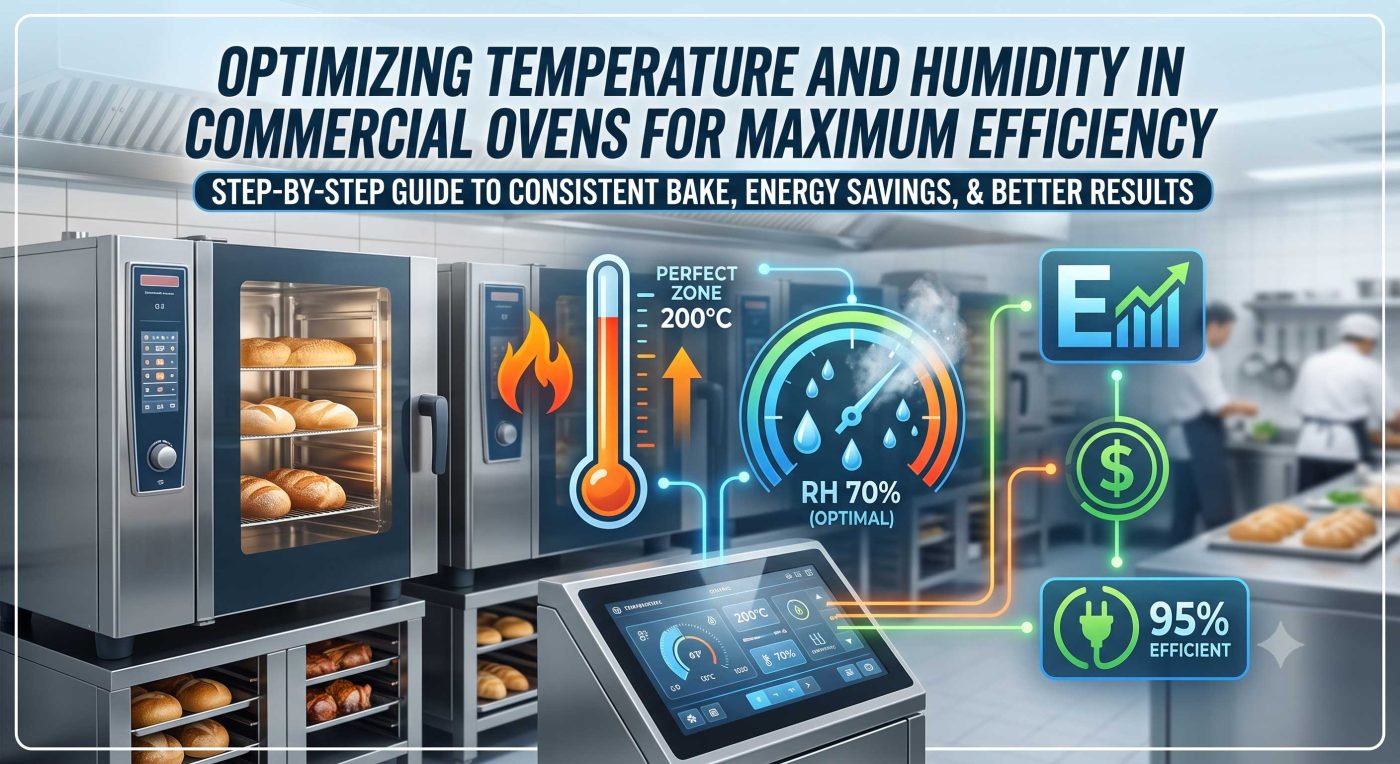
Optimizing Temperature and Humidity in Commercial Ovens for Maximum Efficiency
30
Jun
Jun
Achieving the Perfect Balance of Heat and Moisture in Modern Baking Chambers
When you walk into a high-capacity bakery, the sensory symphony of baking bread is instantly captivating, yet behind that comforting aroma lies a complex web of thermodynamic equations. Every loaf of bread, every delicate pastry, and every batch of flatbread relies on a delicate dance between thermal energy and moisture. Managing these variables is not merely about setting a dial to a specific temperature; it is about managing the microclimate inside the baking chamber to achieve optimal volume, crust texture, and crumb structure. For commercial operators, achieving this balance is also a matter of financial survival, as inefficient thermal management directly translates to soaring fuel bills and wasted batches. At MBICO, we have spent decades studying how heat and steam interact with different dough formulations, and we understand that mastering this relationship is the key to scaling your production without sacrificing artisanal quality.
One of the most common challenges our customers face is transitioning from manual, small-scale baking to automated, industrial lines where even a one-degree variance in temperature or a five-percent drop in humidity can ruin thousands of loaves. Imagine the frustration of opening a state-of-the-art oven only to find that your signature sourdough has failed to rise, sporting a dull, thick, leathery crust instead of the glossy, blistered finish your customers love. This issue rarely stems from a poor recipe; instead, it is almost always a failure of thermodynamic calibration inside the baking chamber. By understanding the physics of heat transfer and moisture migration, you can transform your baking line from a source of unpredictable variance into a highly efficient, reliable engine of consistent product quality.
By the end of this guide, you will not only understand Optimizing Temperature and Humidity in Commercial Ovens for Maximum Efficiency, but also learn how to apply it effectively in your baking process.
The Science of Thermal Energy Transfer in Industrial Baking
To optimize any baking process, we must first dissect how heat travels from the oven’s heating elements into the core of the dough. Heat transfer inside a commercial oven occurs through three primary mechanisms: conduction, convection, and radiation. Conduction is the direct transfer of heat through physical contact, such as when the bottom of a loaf rests on a hot stone tile in MBICO deck ovens. Convection involves the movement of hot air currents over the surface of the dough, a process accelerated by fans in MBICO rotary ovens. Radiation is the transfer of electromagnetic energy directly from the hot walls and burners of the oven to the dough, penetrating the product without needing a physical medium. The balance of these three heat transfer modes forms the unique baking chamber thermal profile, which dictates how quickly the dough heats up from the outside in.
In our years of experience setting up industrial baking lines, we have seen how a misunderstanding of convection vs. radiation heat transfer can lead to severe baking defects. For instance, in a high-velocity convection oven, the rapid movement of hot air can dry out the surface of the dough too quickly, forming a skin before the interior gases have had time to expand. Conversely, radiation heat transfer penetrative properties are gentler, warming the interior of the loaf and encouraging a uniform rise. The ideal thermal profile depends heavily on the product: a delicate sponge cake requires gentle, radiant heat to rise evenly without collapsing, while a thin, crispy flatbread needs intense conductive heat from a solid deck to flash-bake the bottom and create large, rustic bubbles.
According to MBICO’s internal baking chamber trials, adjusting the ratio of convection to radiation heat is critical when scaling production. When we worked with a large industrial bakery in Mashhad that was struggling with dense, under-baked centers in their sandwich bread, our process engineers did not simply raise the oven temperature. Instead, we reconfigured the air baffles inside their rotary ovens to reduce direct convection airspeed while increasing the radiative heat from the chamber walls. This simple shift in the thermal profile allowed heat to penetrate deep into the loaf centers, reducing bake times by twelve percent and eliminating the soggy core issue entirely, all while keeping energy consumption flat.
The Critical Role of Relative Humidity and Steam Injection
While temperature controls how fast the dough bakes, humidity controls *how* it bakes. The level of relative humidity (RH) in ovens during the initial stages of baking is the single most important factor determining oven spring, crust properties, and crumb elasticity. When raw dough enters the baking chamber, it is relatively cold, usually sitting between 20°C and 25°C. If the chamber is injected with high-pressure steam, the moisture immediately condenses on the cold surface of the dough. This condensation process is governed by a fundamental physical principle: the release of the latent heat of vaporization.
As water vapor transitions from a gas to a liquid on the dough’s surface, it releases a massive amount of thermal energy. This latent heat warms the outer layers of the dough far more rapidly than dry air ever could. Simultaneously, the thin layer of condensed water keeps the outer skin of the dough highly elastic. This moisture delays starch gelatinization and protein coagulation on the surface, allowing the carbon dioxide gases and water vapor trapped within the gluten matrix to expand freely. This is the secret to oven spring optimization. Without this initial burst of humidity, the crust would set almost instantly, trapping the gases inside and causing the loaf to either remain dense or rupture violently at its weakest points during the bake.
“Steam is not just moisture; it is a thermal vehicle. By mastering the dew point and steam condensation inside the chamber, a baker can control the exact millisecond the crust begins to form, unlocking unprecedented volume and shine.”
— MBICO R&D Thermal Engineering Team
The moisture on the dough’s surface also plays a vital chemical role in the development of flavor and color. As the water condenses, it dissolves the simple sugars and amino acids present on the surface of the dough. Once the steam phase ends and the oven atmosphere dries out, these dissolved compounds undergo the Maillard reaction and caramelization at high temperatures. This chemical reaction is what produces the deep golden-brown hues, glassy sheen, and complex, nutty aromas of a premium crust. Furthermore, because the surface starches have gelatinized in a wet environment, they dry down into a thin, crisp, brittle shell rather than a thick, tough, leathery skin. Understanding the dew point inside the baking chamber ensures that steam is injected only when the dough is cold enough to trigger condensation; injecting steam late in the bake, when the dough surface has already passed the dew point, is a waste of energy that only serves to soggy the crust.
A Step by Step Guide to Calibrating Temperature and Moisture Profiles
Achieving maximum efficiency and perfect product quality requires a structured approach to calibrating your commercial baking chamber. Below is the precise methodology developed by MBICO’s process engineers to synchronize heat and moisture cycles for optimal throughput.
- Establish the Baseline Thermal Profile of the ChamberBefore introducing any product, you must map the temperature distribution inside your empty oven. Use a multi-channel thermocouple datalogger to measure temperatures at various heights and depths across the baking chamber. This profile reveals any cold spots or heat concentrations caused by worn heating elements, faulty air circulation fans, or deteriorated door seals. Ensure the oven can hold a stable temperature within a margin of plus or minus two degrees Celsius before proceeding to wet testing.
- Calculate the Target Dew Point and Condensation WindowMeasure the core and surface temperature of your dough immediately before loading. To ensure effective steam condensation, the air inside the oven must be humidified to a level where its dew point is higher than the surface temperature of the incoming dough. For example, if your dough enters at 22°C, your steam injection systems must rapidly bring the chamber’s relative humidity to a level where moisture can condense instantly on the dough. If the oven walls are too hot and the air is dry, the steam will simply superheat and act as dry gas, failing to condense.
- Program the Steam Injection Timing and VolumeIncorporate steam at the very beginning of the baking cycle. For standard hearth breads, a steam duration of five to ten seconds immediately upon loading is usually sufficient. The steam must be high-pressure and saturated, containing minimal liquid water droplets to avoid spotting the dough. In MBICO deck ovens, the steam generators are engineered to deliver a precise volumetric burst that blankets the deck instantly, ensuring that every loaf receives an identical moisture profile from the first second of the bake.
- Manage the Transition Phase and Damper ControlsOnce the oven spring is complete—typically within the first third of the total baking time—the moisture inside the chamber must be evacuated. Keeping the oven humid for too long will result in a soft, rubbery crust and a dense crumb. Program the automated dampers to open at the precise moment the gluten structure has stabilized. This venting cycle rapidly drops the relative humidity, allowing the dry heat to initiate the Maillard reaction and bake the interior of the loaf to its target moisture content.
- Monitor and Adjust for Batch Loading DensityA common mistake in industrial operations is failing to adjust thermal and moisture profiles when changing the loading density of the oven. Loading a deck or rotary rack to one hundred percent capacity introduces a massive cold thermal mass and a huge amount of natural moisture from the raw dough itself. To compensate for this thermal drop, you must preheat the oven slightly higher than the target baking temperature and adjust the external steam injection downward, as the high density of dough will naturally release substantial moisture into the air during the early bake phase.
Comparing Heat and Moisture Management Across Different Commercial Ovens
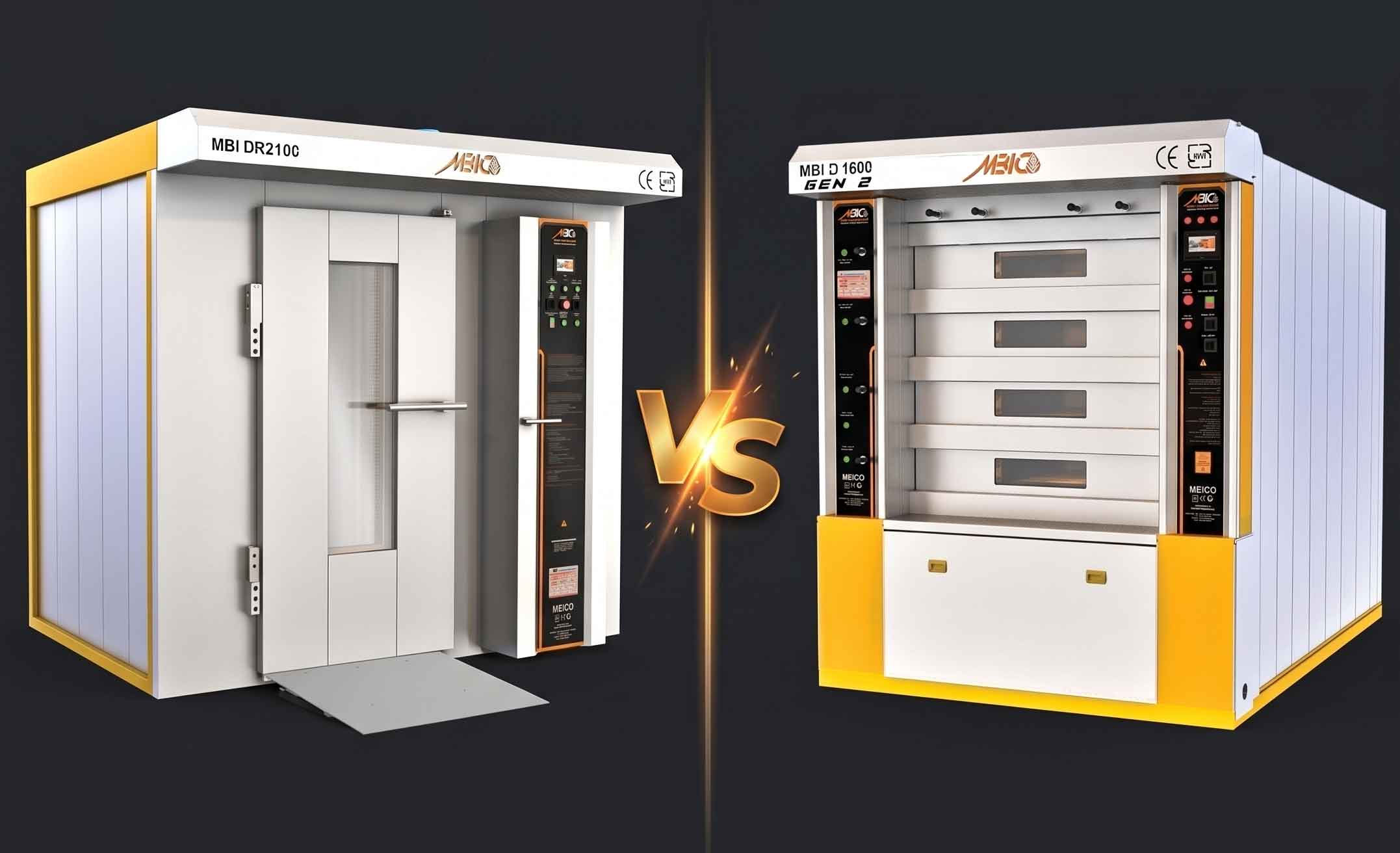
Not all commercial ovens manage thermal energy and moisture in the same manner. Selecting the right equipment for your product portfolio requires a deep understanding of how different oven architectures deliver heat and handle steam retention. Below, we compare the three major types of commercial baking ovens utilized in industrial and semi-industrial operations.
MBICO Deck Ovens
MBICO Rotary Ovens
Tunnel Ovens
| Oven Type | Primary Heat Transfer Mode | Steam Control & Retention | Energy Efficiency Index | Best Suited Products |
|---|---|---|---|---|
| Conduction and gentle radiation from stone or metal hearth plates. | Exceptional. Sealed, low-profile chambers retain steam perfectly, minimizing water and energy waste. | High, due to heavy thermal mass insulation and minimal air exchange. | Artisanal hearth breads, baguettes, traditional flatbreads, and sourdoughs. | |
| Forced convection with supplementary radiation from the rack structure. | Good. Employs powerful integrated steam generators that spray water over heat exchangers during rotation. | Moderate to High, requiring precise exhaust damper control to prevent heat loss. | Sandwich loaves, sweet buns, pastries, cookies, and high-volume sheet cake pans. | |
| Continuous combination of radiation, convection, and conduction zones. | Complex. Requires zoned steam curtains at the entry zone, with progressive venting zones down the line. | Excellent in continuous operation; highly inefficient for intermittent batch production. | Mass-produced sliced bread, high-volume crackers, biscuits, and industrial pita production. |
As illustrated in the comparison, deck ovens excel at moisture retention because their baking chambers are low-profile and tightly sealed. In an MBICO deck oven, when steam is injected, it remains trapped in a dense blanket directly around the dough, requiring less steam volume to achieve perfect condensation. Rotary ovens, on the other hand, rely on hot air movement, which naturally tends to sweep moisture away from the dough surface. To counteract this, our rotary models feature advanced steam synchronization software that temporarily pauses the convection fan during the steam injection phase, allowing the moisture to settle on the dough before the hot air circulation resumes.
Troubleshooting Thermal and Moisture Imbalances in the Baking Line
When something goes wrong with the baking profile, the physical characteristics of the finished product will tell you exactly where the imbalance lies. The following troubleshooting guide outlines the most common thermodynamic issues encountered on the production floor, their underlying causes, and how to resolve them.
Excessive venting leads to dry and pale crusts
If your exhaust dampers are opening too early, or if there is a mechanical leak in your oven’s door seals, the moisture injected at the start of the bake will escape before it can condense on the dough. The symptom of this issue is a loaf with poor volume, a matte or chalky appearance, and a thick, leathery crust that is difficult to chew. To solve this, inspect all physical gaskets and program your control panel to keep the dampers completely closed for at least the first eight to ten minutes of the baking cycle. Additionally, check the water pressure feeding your steam generators, as low water pressure prevents the system from creating the fine mist required for rapid vapor transition.
Uneven heat distribution causes structural collapsing in sandwich loaves
When loaves emerge from the oven looking perfect but collapse or cave in at the sides as they cool, the culprit is almost always an imbalance between convection heat and internal baking temperature. This occurs when the external crust bakes and colors too quickly due to high convective air temperatures, while the inner starch-and-protein matrix has not yet reached its gelatinization and coagulation threshold (typically 80°C to 85°C at the core). The weak internal structure cannot support the weight of the loaf once the hot air inside contracts during cooling. To resolve this, lower the overall baking temperature by 10°C to 15°C and extend the baking time slightly, allowing conductive heat to cook the core of the loaf before the crust becomes too rigid.
Insufficient steam injection limits the volume of hearth breads
If you notice that your baguettes or rustic boules are tearing violently along the sides rather than opening beautifully along your scores, your oven is setting the crust too early due to dry conditions. This lack of moisture prevents the dough from stretching during the oven spring phase. Increase the steam injection volume by extending the duration by three seconds, and ensure that the oven has fully recovered its target temperature before loading the next batch. Loading an oven too quickly after a previous bake prevents the steam generators from reheating to the temperature required to instantly vaporize the incoming water, resulting in wet droplets that spot the dough rather than a true gas phase steam blanket.
Maximizing Energy Efficiency and Reducing Operational Costs in Industrial Bakeries
In the modern industrial landscape, thermal optimization is as much an economic necessity as it is a quality control measure. Heating a massive baking chamber and generating high-pressure steam require substantial amounts of electrical energy or natural gas. Energy efficiency in industrial bakeries can be dramatically improved by analyzing your oven’s duty cycle and minimizing heat loss during loading and venting. Every time an oven door is opened, or a damper is left open unnecessarily, valuable thermal energy escapes into the bakery ventilation system, forcing the burners to work twice as hard to recover.
One of the primary areas of energy waste we observe during factory audits is the over-generation of steam. Generating steam requires heating water to its boiling point and then applying extra energy to convert it into gas. If your oven seals are worn or your dampers are poorly calibrated, you are essentially venting expensive energy straight up the exhaust stack. By upgrading to ovens with high-density mineral wool insulation and automated, precision-machined damper valves, industrial bakeries can reduce their fuel consumption by up to thirty percent. Furthermore, utilizing heat recovery systems to capture the hot exhaust air and use it to preheat incoming water for your steam systems creates a highly sustainable, closed-loop thermal cycle.
“During an energy audit for a high-volume pita bread facility, we discovered that their exhaust dampers were remaining open during the steam injection cycle. By synchronizing the damper solenoids with the steam valves, we slashed their gas consumption by twenty-two percent while improving product consistency across all shifts.”
— MBICO Technical Services Director
Another crucial factor is the scheduling of your bakes. Grouping products that require similar baking temperatures and moisture levels minimizes the energy spent heating up or cooling down the oven chambers between batches. For example, baking high-temperature, steam-intensive crusty breads first, followed by lower-temperature sweet pastries as the oven naturally cools down, maximizes the thermal efficiency of the entire production day. This disciplined approach to thermal scheduling, combined with MBICO’s high-efficiency combustion technology, ensures that your utility bills remain low even as your production volumes grow.
Summary of Key Takeaways for Commercial Baking Success
Mastering the thermodynamics of a commercial baking chamber requires a continuous balance of heat transfer modes, precise timing of moisture application, and disciplined equipment maintenance. Steam is not merely a styling agent for a glossy crust; it is a vital thermodynamic tool that delivers rapid latent heat, delays crust formation, and enables the dough to reach its maximum physical volume. Properly managing the transition from a highly humid environment to a bone-dry baking chamber is the secret to producing consistent, premium baked goods with an exceptional shelf life and a perfect structural crumb.
By implementing a systematic calibration process, upgrading to high-efficiency baking systems, and utilizing data-driven troubleshooting, you can eliminate production waste and significantly lower your operational energy costs. If you are ready to take your baking line’s thermal efficiency and product quality to the next level, contact the engineering and baking experts at MBICO today. Our team in Mashhad is ready to perform a comprehensive thermal analysis of your current systems and help you integrate the advanced deck, rotary, or tunnel oven technology your bakery needs to thrive in a competitive market.
Frequently Asked Questions about Optimizing Temperature and Humidity in Commercial Ovens for Maximum Efficiency
What is the ideal relative humidity level inside an oven for baking crusty artisan bread?
The ideal relative humidity during the first five to ten minutes of baking crusty artisan bread is between seventy-five and ninety percent. This high level of moisture must be achieved rapidly through pressurized steam injection immediately upon loading the cold dough. After the initial oven spring occurs, the relative humidity must be dropped to below twenty percent by opening the exhaust dampers, allowing the dry heat to bake the interior and color the crust.
Why does my bread develop a thick and leathery crust instead of a crispy one?
A thick, leathery crust is caused by a lack of moisture during the initial stage of the bake or by baking the bread for too long at too low a temperature. Without adequate steam condensation, the surface starches cannot gelatinize properly, resulting in a tough, dry skin. To fix this, ensure your steam injection system is operating correctly and increase the baking temperature slightly to shorten the overall baking time, which prevents the loaf from drying out excessively.
How does loading density affect the temperature and steam requirements of a rotary oven?
Loading an oven to its maximum capacity introduces a massive cold mass that causes the air temperature to drop rapidly. To compensate, you must preheat the oven ten to fifteen degrees Celsius higher than your target baking temperature. Additionally, because a dense load of wet dough naturally releases a large amount of moisture into the air as it heats up, you may need to reduce the volume of externally injected steam to prevent the oven chamber from becoming overly humid late in the bake.
Can I use low-pressure steam for crust development in high-volume commercial baking?
Low-pressure steam is generally ineffective for high-volume commercial baking because it contains too many liquid water droplets, which can pool on the dough and cause unsightly dark spots and uneven baking. High-pressure, dry saturated steam is required because it disperses evenly throughout the baking chamber and condenses as a uniform micro-thin film of water on the cold dough, ensuring consistent volume, gloss, and blister development across the entire batch.
Explore MBICO's categories
Bakery equipment
13 Products
bulk and semi-bulk bread baking ovens
3 Products
Bulk Breads Baking equipment
14 Products
Confectionery equipment
7 Products
Mini ovens
3 Products
Pizza and food ovens
4 Products
Baking equipment
25 Products
Bakery oven
5 Products
Tafton baking ovens
3 Products
Barbari baking ovens
4 Products
Sangak bakery ovens
3 Products
Lavash baking ovens
3 Products
Pastry and confectionery ovens
3 Products
Baking ovens
10 Products
Mobile baking machines
4 Products
Explore MBICO's products
Rimok Bakery
Dough Divider Machine
Mini Deck Oven
Bakery cooling rack
Bakery & Pastry Trolley
Portable Rotary Semi – Automatic Oven for Baking Traditional Breads
Tunnel Baking Oven
Fermentation Chamber