






Recipe
The Simplest Karavai Recipe
24
Aug
Aug
Mastering Karavai: The Essential Guide to Baking the Exquisite Russian Ceremonial Bread
Baking truly elaborate ceremonial breads, like the stunning Russian Karavai, often feels like crossing a professional threshold. If you have ever attempted an intricate recipe, you know the frustration: the dough refuses to proof evenly, the crumb structure is inconsistent, and delicate decorative elements seem impossible to execute perfectly. The weight of tradition, the intricate details, and the client expectation can feel like an insurmountable challenge, whether you are a passionate home baker or managing a commercial production line.
But what if mastering this historically rich and symbolic bread was not only achievable but deeply rewarding, provided you approach it with precision and the right technical knowledge?
At MBICO, a leading manufacturer of high-quality professional bakery equipment, we understand that mastering traditional baking is an art form fueled by passion and precision engineering. We empower bakers, from dedicated home enthusiasts to large-scale industrial producers, to achieve professional, repeatable results by bridging the gap between ancient traditions and modern technology.
Our deep expertise in designing and manufacturing complete, automated production lines for traditional breads ensures authentic quality is never sacrificed for efficiency. This guide draws upon that technical authority, focusing on the techniques needed to perfect the Karavai.
What You Will Master in This Karavai Tutorial:
- The profound cultural history and symbolism embedded in the Russian ceremonial bread.
- Expert techniques for achieving a consistent, perfect proof and an exemplary crumb structure.
- Detailed instruction on crafting the complex, beautiful decorative dough elements (including the iconic wreaths, swans, and wheat sheaves).
- How to apply precision baking principles, essential for high-quality production, directly into your kitchen.
By the end of this article, you will have a comprehensive understanding of Karavai, transforming daunting challenges into triumphant, beautifully crafted creations ready for any special occasion.
What is Karavai? Unveiling a Culinary Symbol
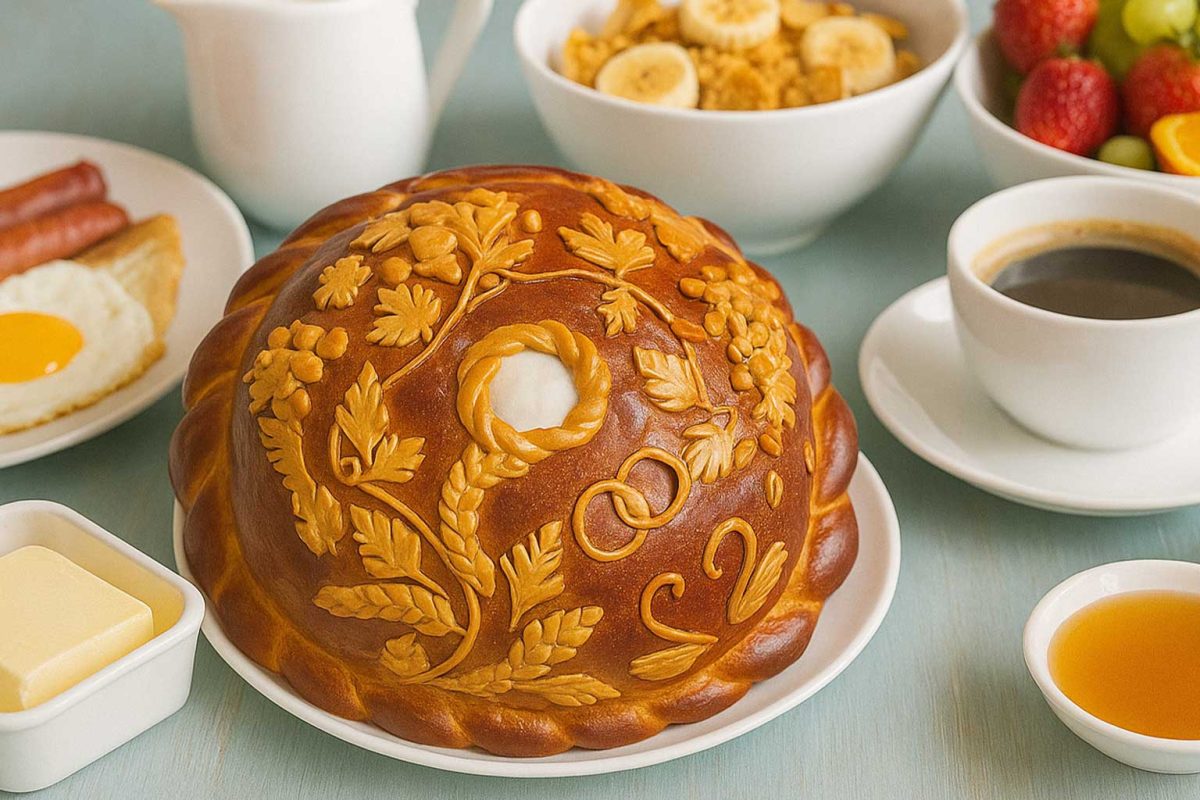
The Karavai is far more than just a loaf of bread; it is a profound symbol of hospitality, fertility, and prosperity, deeply embedded in Russian and Eastern European wedding traditions. This grand, round, leavened bread, primarily made from wheat flour, stands out due to its elaborate decorative elements, typically crafted from the same dough. These decorations often include figures of doves (symbolizing fidelity), braids, flowers, and wheat stalks, each carrying a specific meaning relevant to the couple’s future.
From a food science perspective, the Karavai is a testament to the versatility of wheat. Its strong gluten network, when properly developed, allows for the creation of both the expansive, soft crumb of the main loaf and the intricate, structural integrity required for the decorations. The leavening process, often involving yeast, contributes to its characteristic airy texture and subtle tang, making it a delicious centerpiece as well as a visual spectacle.
The Historical and Cultural Significance of Karavai
In my years of studying traditional breads, few have a story as rich as Karavai. Historically, the baking of Karavai was a significant ritual in itself, often accompanied by songs and blessings, performed by married women to ensure good fortune for the newlyweds. It was usually baked in a large wood-fired bakery oven, creating a crust with unique depth of flavor and a soft, yielding interior – a characteristic that many modern bakers strive to replicate. The size of the Karavai was often indicative of the family’s wealth and status, with some loaves growing to immense proportions.
The shared act of breaking and eating the Karavai signifies the joining of families and the beginning of a new household. It’s a beautiful reminder that food, at its core, is about connection and community.
Mastering the Karavai Dough: Science Meets Art
Creating the perfect Karavai begins with understanding your dough. This isn’t just about mixing ingredients; it’s about coaxing life into flour and water.
Key Ingredients and Their Roles
Wheat Flour: For Karavai, a high-protein bread flour is essential. The higher protein content means more gluten formation, which provides the elasticity needed for both the main loaf’s structure and the delicate decorations. Think of gluten as the bread’s skeletal system, providing strength and chewiness.
Yeast: Whether active dry or instant, yeast is the engine of fermentation. It consumes sugars in the dough, producing carbon dioxide gas that makes the bread rise, creating its open, tender crumb. Proper yeast activation and proofing are critical; too little, and your Karavai will be dense; too much, and it might overproof and collapse.
Liquids (Milk/Water): Hydration levels are crucial. Milk adds richness and helps with crust browning due to its lactose, while water keeps it simple and allows the grain flavors to shine. The right hydration ensures a dough that is pliable enough for shaping but strong enough to hold its form.
Fat (Butter/Oil): Fat enriches the dough, tenderizes the crumb, and extends shelf life. It interferes with gluten development slightly, leading to a softer bread, which is desirable for Karavai.
Sugar: Provides food for the yeast and contributes to the Maillard reaction during baking, giving the Karavai its beautiful golden-brown crust and complex flavors.
The Art of Kneading and Fermentation
Kneading develops the gluten. For a ceremonial bread like Karavai, you’ll want a well-developed, elastic dough that passes the “windowpane test” – meaning you can stretch a small piece thin enough to see light through it without tearing. This strength is vital for supporting the weight of the decorations.
Fermentation, or proofing, is where the magic truly happens. I once had a student who rushed the first proof, and their Karavai came out dense and heavy. Patience is key! A slow, steady rise allows for complex flavor development and a superior crumb structure. Environmental factors like temperature and humidity play a huge role, so observe your dough, don’t just stick to a clock. A good piece of bakery equipment, like a proofing cabinet, can make this stage much more consistent.
Crafting the Decorations: The Karavai’s Crowning Glory
This is where the Karavai truly comes alive! The decorations are typically made from a stiffer, unyeasted dough (often just flour and water, or a small portion of the main dough saved before the final rise) to maintain their shape during baking. However, some traditional recipes use a slightly enriched dough for decoration as well, for a consistent appearance. The key is to work quickly and confidently.
Popular Karavai Decorations and Their Meanings:
- Doves: Often placed on top, symbolizing love, fidelity, and peace for the couple.
- Braids: Representing the intertwining of two lives.
- Wheat Sheaves: Abundance, fertility, and prosperity.
- Flowers and Leaves: Beauty, growth, and new life.
To achieve crisp, well-defined decorations, ensure your decorative dough is firm. Use simple tools like a sharp knife, scissors, or even specialized dough stamps. Attach them to the main loaf with a little water for adhesion. Baking Karavai, with its intricate details, requires an oven that can maintain even temperatures to prevent burning delicate elements while ensuring the main loaf bakes through. Many modern commercial ovens, including those also capable of handling pizza and food ovens, excel at this versatility.
Baking Your Karavai: The Final Transformation
Preheating your oven to the correct temperature is paramount. Karavai typically starts at a higher temperature (around 400-425°F or 200-220°C) for the first 10-15 minutes to achieve a good oven spring and set the crust, then the temperature is reduced (to around 350-375°F or 175-190°C) for the remainder of the baking time to ensure it cooks through without over-browning the decorations. A good internal temperature for a fully baked Karavai is around 200-210°F (93-99°C).
For a truly professional finish, consider an egg wash before baking to give the Karavai a glossy, golden hue. If your decorations start to brown too quickly, you can gently tent the Karavai with aluminum foil.
Conclusion: Embrace the Tradition, Elevate Your Craft
Baking a Karavai is a journey through history, culture, and the fascinating science of breadmaking. From understanding the gluten network to patiently nurturing your yeast, every step is an opportunity to deepen your expertise. The result is not just a beautiful loaf, but a powerful symbol, crafted with your own hands and infused with your passion. This weekend, I challenge you to explore a new facet of Karavai. Try experimenting with a slightly different decorative dough, or meticulously tracking your dough’s temperature during bulk fermentation. Observe the difference, learn from the process, and continue to elevate your craft.
Explore MBICO's categories
Bakery equipment
13 Products
bulk and semi-bulk bread baking ovens
3 Products
Bulk Breads Baking equipment
14 Products
Confectionery equipment
7 Products
Mini ovens
3 Products
Pizza and food ovens
4 Products
Baking equipment
25 Products
Bakery oven
5 Products
Tafton baking ovens
3 Products
Barbari baking ovens
4 Products
Sangak bakery ovens
3 Products
Lavash baking ovens
3 Products
Pastry and confectionery ovens
3 Products
Baking ovens
10 Products
Mobile baking machines
4 Products
Explore MBICO's products
Dough Mixer
Bread Cooling Conveyor Machine
Dough pouring machine
Dough Proofing Machine
Dough Rounder
Automatic Production Line for Baking Sangak Bread
Pastry Dough Sheeter
Tunnel Baking Oven